What Is a Straw Poll? Meaning, Examples and When It Is Enough
A straw poll is a quick, informal vote that shows where a group stands before anyone decides. It is unofficial and non-binding: nobody is committed by the answer. A chair who asks Who would be happy to move our weekly meeting to Thursdays? and counts the hands has taken a straw poll. If the move needs a real decision, that comes later, by the group's usual rules.
What is a straw poll for?
A straw poll, also called a straw vote, takes the temperature of a group. People answer one question, and the group sees the totals once everyone has answered. The poll adopts nothing and rejects nothing. The count helps the group choose what to do next: keep talking, change the proposal or bring it to a vote.
- Should we keep discussing this? A meeting has spent twenty minutes on one item and nobody knows whether the room is split or already agrees.
- Which options are still alive? Five venues are on the table, and a straw poll shows which two deserve a closer look.
- Is there enough support to bring a proposal? Before someone spends a week drafting a plan, they check whether it has a chance.
- What does the class think before the lesson? A teacher asks students to pick a side before the topic is taught.
Why is it called a straw poll?
The usual explanation, given in The American Heritage Dictionary of Idioms, is a straw held up to see which way the wind blows. English keeps the same picture in a straw in the wind, a small sign of what is coming. A straw poll does the same for opinion: a light, quick check of which way a group leans, with nothing resting on it.
Straw poll, formal vote or survey: three questions decide
Groups reach for a straw poll in more situations than it can handle. Before you take one, ask three questions about the decision in front of you.
- Will the result bind anyone or go in the minutes as a decision? Then follow your group's procedure for that decision. A straw poll can come before it, never instead of it.
- Must a particular person or body approve it? If a board, a manager or the members entitled to vote hold the decision, the straw poll prepares a recommendation for them. The authorized decision-maker still has to act.
- Do you need reasons, or the view of people outside the room? One question shows the spread in this group. To learn why people voted that way, ask a follow-up question. To learn what a wider group thinks, decide who has to be represented and how you will reach them, and run a survey.
If you only need to know where this group stands, take a straw poll and let whoever holds the decision make it afterwards. A product team torn between two release dates can use the result to recommend one to its lead. A nonprofit board changing its membership fee needs a board vote, because its bylaws give the fee to the board, and a show of hands in a working session does not count as one.

A straw poll gives you the count but not the reasons behind it. If the group needs both, the poll vs survey comparison shows what a single follow-up question adds to the same one-line poll.
How is a straw poll conducted? Five steps
Say the 12-person committee of a local running club has argued for half an hour about moving its annual 10K from June to September. June races have been hot. September clashes with the start of the school year. The chair stops the debate and takes a straw poll, and each step below shows what she does.
- Say what the poll is for. This is a straw poll. It decides nothing; I want to see where we are before we spend more time on this. That tells members how the chair will use their answers.
- Ask one question with answers that cover the room. She asks Where are you right now on moving the 10K to September? with four answers: Yes, move it, Fine either way, No, keep June and I need more information first. Without the last two, doubters either pick a side they do not hold or stay silent.
- Agree on the bar before anyone votes. The committee agrees that if at least 8 of its 12 members choose Yes, move it or Fine either way, the chair takes the proposal to the board. Everyone knows in advance how a neutral answer counts and that I need more information first stays in the total.
- Let everyone answer at the same moment. In a show of hands people glance around before they raise theirs, and in a go-round whoever speaks last has heard everyone else. A link on each person's phone collects every answer while the chair keeps the count off the shared screen until voting closes.
- Show the result and name the next step. The chair puts the count on the screen, reads it aloud and says what happens now. A straw poll without a next step costs the minute it took and gives nothing back.
- Show of hands. It takes seconds and needs no tools. Everyone sees who voted how, so senior people and the first hands pull the rest along. Keep it for low-stakes questions in a small, relaxed group.
- Cards or fingers on the count of three. Agile teams use this idea in planning poker: everyone shows an estimate at once, so nobody anchors on the first number. Fist to five, where people raise zero to five fingers together, does the same for agreement.
- Paper slips. Hand out identical slips with the same printed choices, ask people to mark one and fold the slip, and mix the slips before you count. Nobody needs a phone, and a marked slip is far harder to trace than a raised hand.
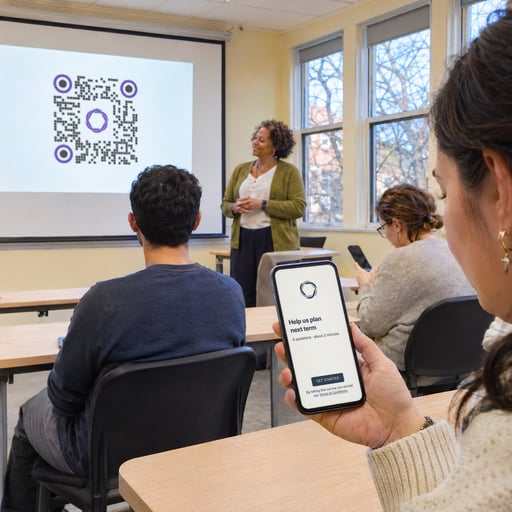
- A link or a QR code. Remote colleagues vote alongside the room and the count is exact. It needs a little setup before the meeting.
- Should we keep discussing [topic] today, or park it for next week?
Keep discussing / Park it / Either is fine - Where are you on [proposal] right now?
For it / Can live with it / Against it / Need more information - Which of these [options] should we look at more closely?
Let people pick two, so the count shows which options have support rather than one narrow winner - Can we go with [decision] and review it in a month?
Yes / Yes, with a concern I will raise / No - Before we start: is [statement] true?
True / False / Not sure. Ask again at the end of the lesson and compare the two counts - Which date works best for [event]?
[Date 1] / [Date 2] / [Date 3] / None of these work for me - A creator asks listeners: what should the next episode be about?
[Topic 1] / [Topic 2] / [Topic 3] - A volunteer lead asks the team: would you help at [event] if we moved it to [weekend]?
Yes / Maybe / No - Do we all agree to move the launch? → Where are you on moving the launch to May?
A yes-or-no about agreement pushes doubters into silence; a question about position gives them somewhere to stand. - Should we choose the cheaper vendor or the better one? → Which vendor should we look at more closely, [A] or [B]?
Words like cheaper and better decide the vote before anyone answers. - Is the new schedule OK? → How does the new schedule work for you? Works / Works with changes / Does not work
OK hides the people who are only putting up with it. - Which venue and date do you prefer? → two separate polls
One question about two things gives you a count nobody can read. - Count who can live with it, not only who wants it. Five want September and three are fine either way, so 8 of the 12 answers meet the bar the committee set. The two answers asking for more information stay in the total.
- Treat need more information as a question, not a vote. Two people asked for more information, so the chair asks the room what anyone needs to know before the board meets. The answer is whether the park is free on the September date, and checking it becomes the first task.
- Hear out the no votes. The chair invites anyone who prefers June to say why. The reason given, the school calendar, goes into the proposal, so the board weighs it instead of hearing it for the first time on the day.
- Pass it on as what it is. The board receives the proposal with one line: In a committee straw poll, 5 of 12 favored September and 3 were fine with either month. The date changes only when the board votes, because the club's rules give the race date to the board.
- Order and visibility. In an open vote, people see the first hands and follow them. Collect answers at the same moment or by link.
- Who is missing. The colleague on leave and the volunteer who never comes to meetings are not in the count. Send them the link as well, or say out loud that the result covers the room.
- Repeat votes. On an open link, one person can answer twice. Even 12 submissions from a room of 12 do not prove everyone voted once. Report the result as submissions received, not as people, and when each eligible person must be counted exactly once, use your group's formal voting procedure.
- Wording. A question that hints at the right answer gets that answer. Read it aloud and ask whether someone on the other side would call it fair.
Show of hands, cards, paper or a link
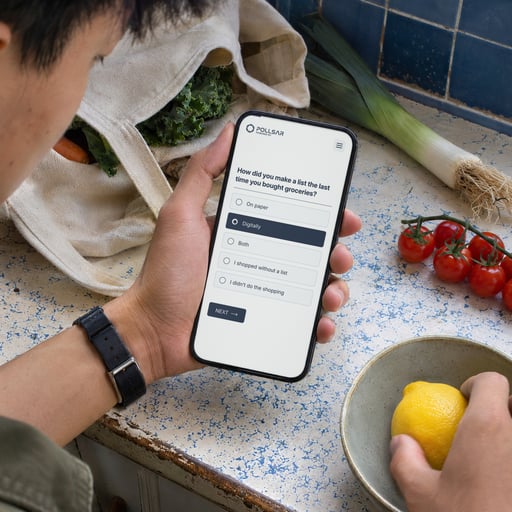
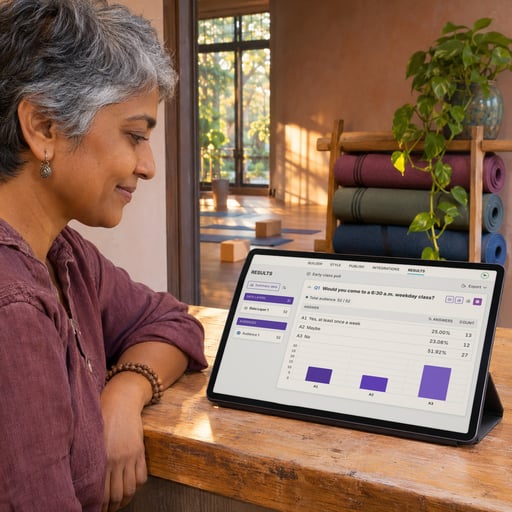
For the link route, the chair's whole setup is one single-choice question. In Pollsar she can type it herself or describe it to the AI assistant, which drafts the question with its answers, then share the link or show the QR code on the screen. Members open it on their phones without an account and see a thank-you page after they answer. The chair opens Results and shows the group the totals when voting closes. Making a poll like this from start to finish is covered on the poll maker page.
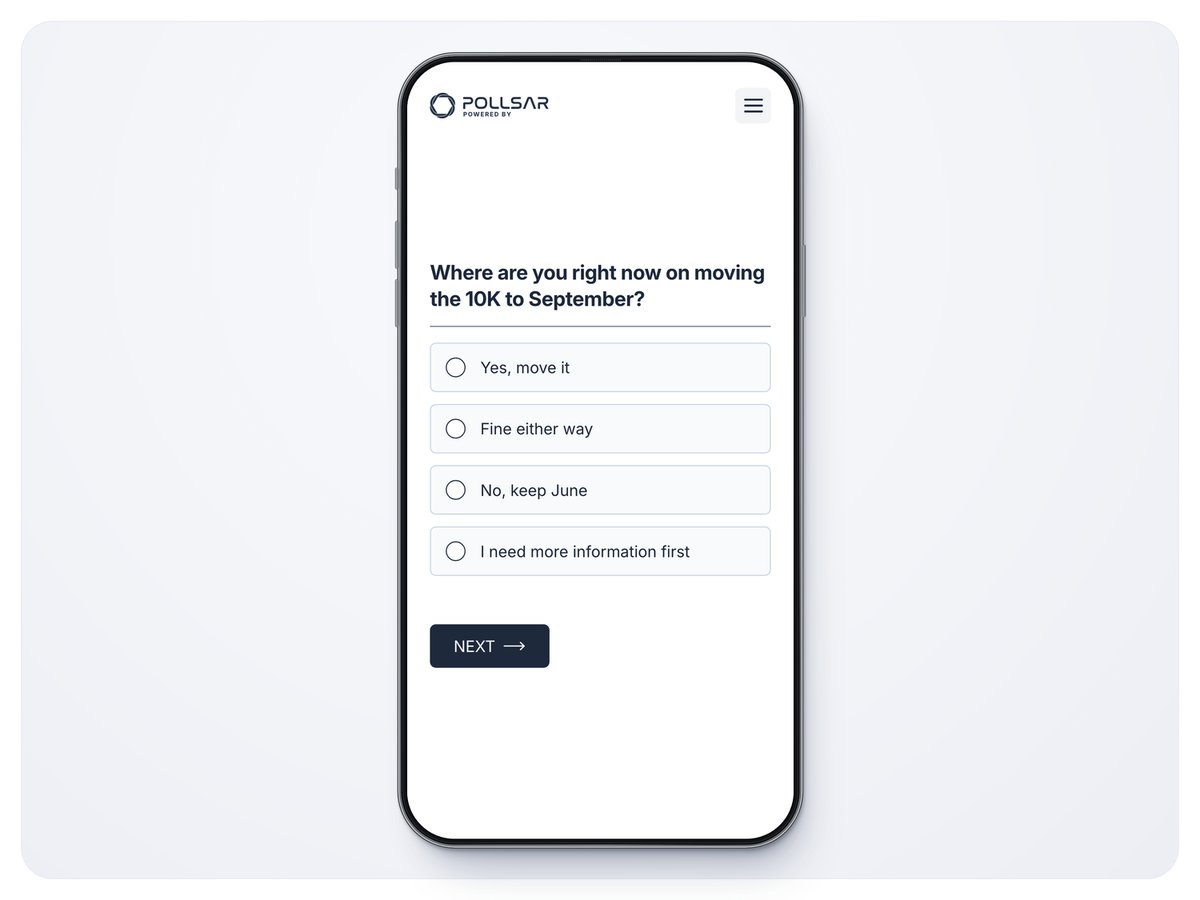
What committee members see on their phones
Straw poll examples you can copy
A good straw poll question asks where someone stands, not for a final verdict, and lets people say they are not ready. Swap the words in square brackets for your own.
For teams and meetings
For classes, events and communities
Before → after: four rewrites
When three or four answers are too coarse and you want degrees of agreement, the wording rules from the guide to Likert scale questions carry over to a straw poll.
Reading straw poll results: the running club example
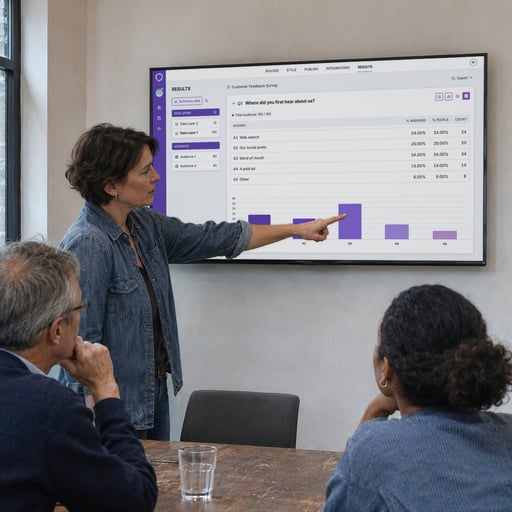
Back to the committee. All 12 members vote from their phones, and the chair puts Results on the screen.
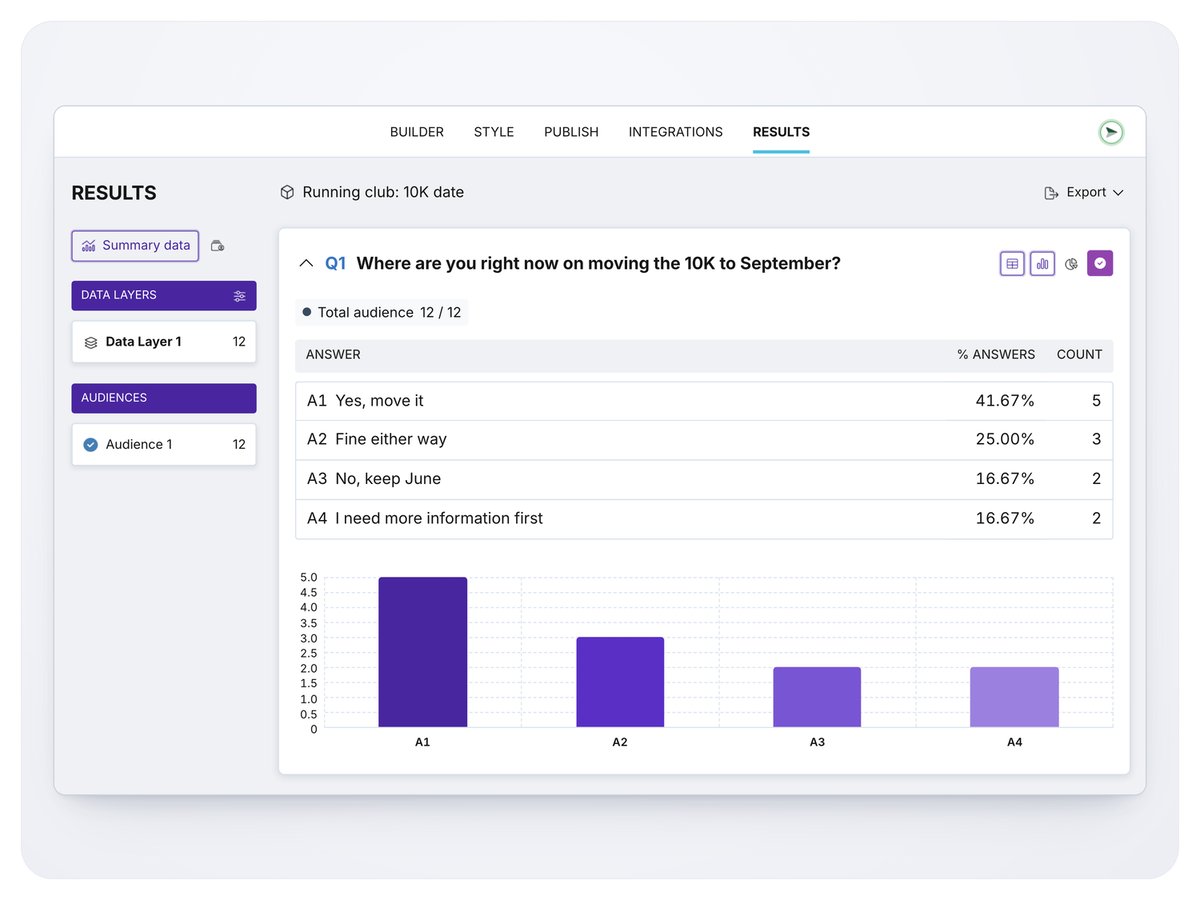
The committee's straw poll in Results: 12 answers
Two harder cases come up often. If the count falls short of the bar, the proposal does not go forward as it stands; ask what each side needs, change the proposal and poll again once something new is on the table. Polling the same question over and over without a change only presses the minority until they give in. If most people pick need more information, stop there. The group is not ready, and a vote of any kind would only record the confusion.
Are straw polls accurate?
The count tells you what the people who answered chose at that meeting. In the club, all 12 members answered, so the count covers the whole committee. Had only eight replied and all eight backed September, the honest report would be 8 of 8 who answered backed September; four members did not answer. With an open link, it describes only the people who chose to take part, which is why pollsters call such polls unscientific. Opinions also move once the discussion goes on. Four things decide whether even that narrow reading holds.
When you need to know what a whole team or customer base thinks, and why, move from a straw poll to a survey with a planned list of who gets it and a question about reasons. Ask What would make September work for you? and you learn what people need before the vote. The guide to open-ended questions has more ways to ask for reasons.
Frequently asked questions
Is a straw poll anonymous?
Only if you run it that way. A show of hands is public; folded slips with printed choices are close to anonymous in the room. With an online link, voters do not see each other's answers, but the person who set it up can open each response. If you promise anonymity, check what that view shows and leave out questions about name or email.
Can you take a straw poll in Slack or a group chat?
Yes. A chat poll with emoji reactions works for small, low-stakes questions. Give each option its own emoji, and remember that in a Slack reaction poll anyone who can see the message can check who added each reaction.
Close the straw poll with one line for the minutes
A straw poll ends when the group knows what it showed and who decides next. Write that down before people leave the room, so nobody later mistakes the count for the decision.
The running club's line reads Straw poll, committee meeting. Of 12 people who voted, 5 favored moving the 10K to September and 3 were fine with either month, which meets the committee's bar of 8. The board will decide at its next meeting, once the park confirms the date.