Classroom Games: 20 Fun Ideas for Every Age, Minute and Mood
The best classroom games, the cool ones students ask for again, take under a minute to explain, run on things already in the room and leave the class knowing something it did not know before. Below are 20 games for the classroom, sorted by what your students need right now: to wake up, to review, to work as a team or to settle. Every game lists its minutes, its materials and the grades it fits.
Near the end, one worked example turns a favorite game into a scored quiz, so the fun finishes with a number you can teach from.
How to choose classroom games in three questions
A long list does not help at 8:40 on a Tuesday. Three questions shrink it to two or three games.
- How many minutes do you have? Five minutes or less? Try Beat the Clock at 2 minutes, Stand Up, Sit Down at 3 or Simon Says at 3 to 5. Ten to fifteen: a review or a team game. A whole stretch of the lesson: stations.
- What is in the room? Voices and desks run most of these games. Paper, a marker and a board open up more. One phone or laptop per team opens the scored quiz at the end.
- What should be different when the game ends? Awake, more knowledgeable, closer as a group or calmer. That answer is the section you go to.
A small box of classroom resources makes every game faster: a timer, a stack of blank cards, two markers, a soft ball, a die. Nothing below needs more, so these are free classroom games in the plainest sense: no purchase, no printing. Worksheets and classroom assignments you already have turn into games too: a page of ten vocabulary words becomes a bingo grid in one minute.
Before any game, spend two minutes on five things. They matter more than the choice of game.
- The rule in two sentences. If you cannot say it in two sentences, pick another game.
- A quiet signal the class already knows, such as a raised hand or three claps.
- Teams made in advance, three or four students each, so nothing is lost to choosing sides.
- A job for everyone not playing: judge, timekeeper or scorer.
- An end. Say what happens when the timer rings, so nobody argues about one more round.
All 20 games by the minutes they take:
- 2 to 5 minutes: Beat the Clock, Stand Up, Sit Down, Simon Says, Hot Potato Review, One-Word Story.
- 5 to 10 minutes: Four Corners, Human Knot, Mystery Object, Around the World.
- 10 minutes: Hot Seat, Word Scramble Relay, Two Truths and a Lie, Back-to-Back Drawing, Charades.
- 10 to 15 minutes: Classroom Pictionary, Review Bingo, Math Baseball.
- 15 to 20 minutes: Indoor Scavenger Hunt, the paper board game, the escape room on paper.
Active games for the classroom that wake everyone up
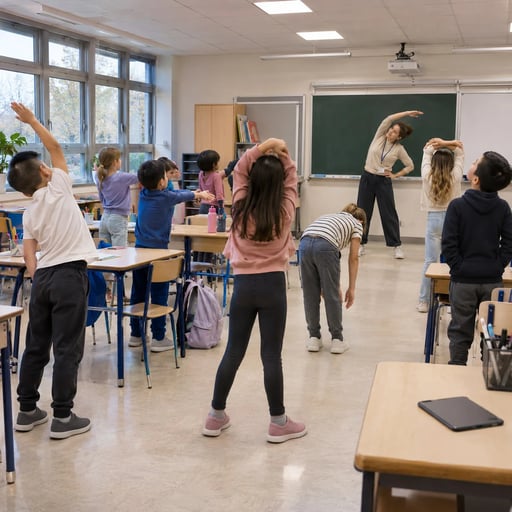
These are quick games to play in the classroom between two tasks: standing, moving, answering with the whole body. Most are 5-minute classroom games or shorter, and all are easy and simple enough to explain in two sentences.
Four Corners
5 to 8 minutes. No materials. Second grade and up. Label the corners A, B, C and D. Read a question with four answers and let students walk to the corner of their choice. Ask one student from each corner why they chose it, then give the answer. Older classes enjoy a minute of arguing before they are allowed to move.
Simon Says with a lesson inside
3 to 5 minutes. No materials. Kindergarten to fourth grade. Normal rules, but the commands carry the content: Simon says show me a triangle with your arms, Simon says hop the number of syllables in “elephant”. A student who slips becomes a second Simon instead of sitting out, so nobody is left on the sidelines.
Stand Up, Sit Down
3 minutes. No materials. Third grade and up. Read statements about the unit. True means stand, false means sit. Write some false statements that sound true, such as A whale is a fish, and pause when the room splits. A split room is a free discussion.
Beat the Clock
2 minutes. A timer. Any age. Use it for transitions: books out, desks clear, line at the door before the timer ends. The class plays against the clock, never against a student, and the best time goes on the board for tomorrow to beat. It is one of the simplest classroom management games, because a routine that is a game needs no reminders.
Hot Potato Review
3 to 5 minutes. A soft ball. Kindergarten and up. Students pass the ball around the circle while you count down silently from ten. Whoever holds it at stop answers a question from the unit and starts the next pass. A miss costs nothing: the class helps and the ball moves on. For kindergarteners the question is a letter sound or the next number.
Learning games that review what you just taught
Educational games in the classroom work when the goal of the game and the goal of the lesson are the same. If students win by being loud or fast, they learn to be loud or fast. In the games below, the winning move is knowing the material.
Classroom Pictionary
10 to 15 minutes. Paper or a whiteboard. Second grade and up. Two teams. One student draws a term from the unit, no letters or numbers, and their team guesses within one minute. Use erosion, habitat or perimeter. Pictionary works as a review because a drawing requires the idea, and a funny drawing is easy to remember.
Review Bingo
10 to 15 minutes. Paper. Second grade and up. Students write nine or sixteen words from the unit in a grid, in any order, which makes every card different. Bingo games for the classroom work best this way: you read definitions and they cover the matching word. The first full line calls bingo and reads the covered words back as proof. The prize is applause and nothing else. For math, put answers in the grid and read the problems.
Hot Seat
10 minutes. No materials. Third grade and up. One student sits facing the class with their back to the board. You write a term there, and the class defines it without saying the word. Rotate the seat every term. High schoolers do well with concepts instead of words, such as supply or photosynthesis.
Word Scramble Relay
10 minutes. Cards. First grade and up. Write each spelling word on a card with its letters scrambled, one set per team. Students take turns running a card to the front table and writing the word correctly under the scramble. The next student cannot go until the word is right. The same relay works for sentences with the words out of order.
A board game on a sheet of paper
15 to 20 minutes. Paper and a die. First grade and up. Draw a path of 20 squares on one sheet for each group of four. A player rolls the die and answers a question card from the unit: a right answer moves the token by the number rolled, a miss means staying put. The first token on square 20 wins. Classroom board games you already own work as well: Connect Four where a disc must be earned by a correct answer, or a vocabulary round with letter tiles.
Math Baseball
10 to 15 minutes. A board and question cards. Second grade and up. Draw a diamond on the board and split the class into two teams. The batter picks a single, a double or a triple, which is an easy, a medium or a hard problem. A right answer moves the team's marker that many bases, a wrong one is an out, and three outs switch sides. Choosing the difficulty is the lesson inside the game: students find out what they can actually solve.
Escape room on paper
20 minutes. Paper. Fourth grade and up. Fold four sheets shut and number them. Each holds a puzzle from the unit, and its answer is the word or number a team shows you to open the next sheet. Teams of four work at their own pace, and the first to solve sheet 4 has reviewed the whole unit. Keep one hint per team in reserve, so no group sits stuck.
Community games that turn a class into a team
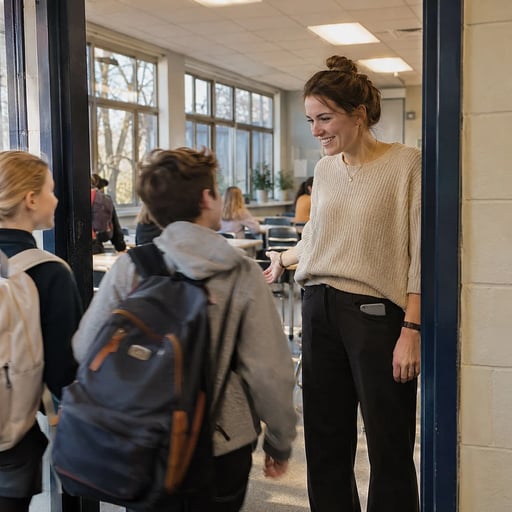
A class whose members know each other argues less and answers more. Classroom community building games fit the first week of school, the day after a break and any time groups are new.
Two Truths and a Lie
10 minutes. No materials. Fourth grade and up. Each student shares three statements about themselves and the class guesses the false one. Ask students to pick truths they are happy to share, like a hobby or a book they have read. Nothing about family, home or health.
Human Knot
5 to 10 minutes. Groups of six to eight. Third grade and up. Stand in a circle, reach across and take two different hands, then untangle without letting go. Talking is allowed. Afterward ask one question: who gave the directions, and who listened?
Back-to-Back Drawing
10 minutes. Paper and pencils. Second grade and up. Pairs sit back to back. One holds a simple picture made from shapes and describes it; the other draws from the words alone. Compare the two pictures. Classroom art games like this one teach precise language, and nobody needs to draw well.
One-Word Story
5 minutes. No materials. Second grade and up. Students build a story around the circle, one word each. Of all the funny games for the classroom, this one needs no preparation: the story always goes somewhere nobody planned. Add a rule that each story must include three words from the unit.
Indoor games for when the class needs to settle
After recess, on a rainy day or at the end of a long morning, indoor games for the classroom should lower the volume without lowering the energy. When the goal is a short physical or breathing reset instead of a game, a set of brain breaks has quieter options.
Charades
10 minutes. Cards. First grade and up. A student draws a card and acts it out in silence while the class guesses. Use verbs for younger students and processes for older ones, such as melting, water evaporating from a puddle or a seed sprouting. Teams take turns, so the audience always has a job.
Mystery Object
5 to 10 minutes. No materials. Second grade and up. Think of an object, an animal or a character from the unit. The class gets twenty yes or no questions. Keep a tally on the board and praise the questions that narrow things down. Does it live in water? beats Is it a shark? The class learns to ask better questions as a side effect.
Indoor Scavenger Hunt
15 minutes. Sticky notes. First grade and up. Stick ten notes around the room, each with a clue and a question. Teams find them in order and write the answers on one sheet. Walking pace only. A hunt turns a worksheet into a reason to cross the room.
Around the World
5 to 10 minutes. Flash cards. First grade and up. One student stands behind a seated classmate, and you show a flash card. Whoever answers first moves on to stand behind the next classmate, and the other takes the seat. The student who gets farthest around the room before time is up wins. Pick cards the whole class can answer, so the game reviews instead of sorting students.
Classroom center games: four stations, four games
Classroom centers need games that run without you. Pick four of the games above, put each on a card with the rules in two sentences, and rotate groups every six minutes. Word Scramble Relay, Back-to-Back Drawing, Mystery Object and the paper board game suit stations best. At the word station, put the answer on the back of each scrambled-word card. One student writes the word and a partner flips the card to check, then they switch jobs. At the drawing station, partners swap roles after each picture. At the mystery station, the holder keeps the answer card and replies yes or no. At the board station, each question card carries its answer on the back. At six minutes, leave the cards face up with the scrambled side showing for the next group. You circulate, listen and note which station gets stuck.
Classroom games by age, from kindergarten to college
Classroom games for kids of different ages are mostly one game with one thing changed. Here is what to change.
- Kindergartners and first graders. Shorter rounds of three to five minutes, pictures instead of words and one rule at a time. Simon Says, Hot Potato Review with letter sounds and Pictionary with you drawing are the best kindergarten classroom games and activities. Follow each active game with a sit-down one.
- Second and third graders. Add a score they can see on the board and teams of three or four. Four Corners, Review Bingo and the paper board game fit.
- Fourth graders. They want to argue. Hot Seat, Pictionary and the scavenger hunt work, and so does letting a team write the questions for another team.
- Fifth graders. The same games plus a twist: a secret rule, a harder term, a faster timer. Two Truths and a Lie starts to work well at this age.
- Middle schoolers. They dislike looking silly in front of everyone, so use pairs and teams and keep the pressure low. Make them the question writers and the judges. Hot Seat, Mystery Object and Stand Up, Sit Down work.
- High schoolers and secondary classes. Use games as a ten-minute review before an exam. Four Corners with a minute of debate, Hot Seat with concepts and Stand Up, Sit Down on common misconceptions suit this age.
- College students. Frame it as an ungraded warm-up, and let students write the questions. A round of Stand Up, Sit Down on the week's misconceptions gives an instructor the picture in two minutes.
Video games in the classroom: when they help
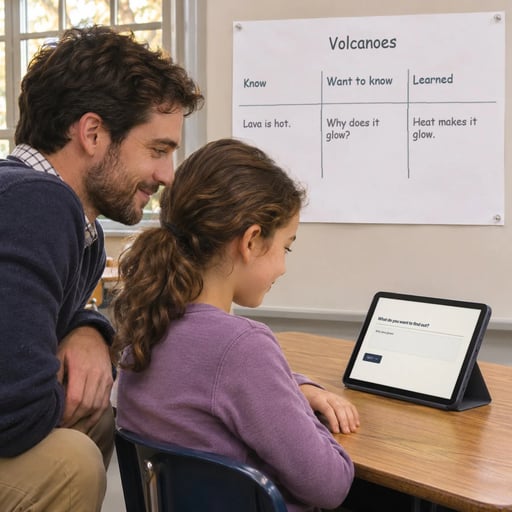
Video games in the classroom help when the game itself practices the skill you teach and a round takes ten minutes. In other cases loading time, sign-ins and the game's own goals eat the lesson. If what you want is the buzz of a game on a screen, a quiz with points gives you interactive classroom games without installing anything: one link, and everything happens in the browser.
Turn any classroom game into a scored quiz
A game ends with a winner and tells you little. A scored round tells you which question the class missed. Say a sixth-grade science teacher runs Four Corners to review the seasons with 24 students. The corners keep the room moving. A short quiz on a screen adds the record.
After Four Corners, give each team one device for a ten-question seasons round. You do not build it by hand: describe it to the AI assistant in Pollsar, for example Ten multiple choice questions on why we have seasons for grade 6, one point for each right answer, and it writes the questions and sets the points. Put the link or the QR code on the board. Ask for one answer per team and leave out names: students answer without accounts, and you see the class picture, not who answered what.
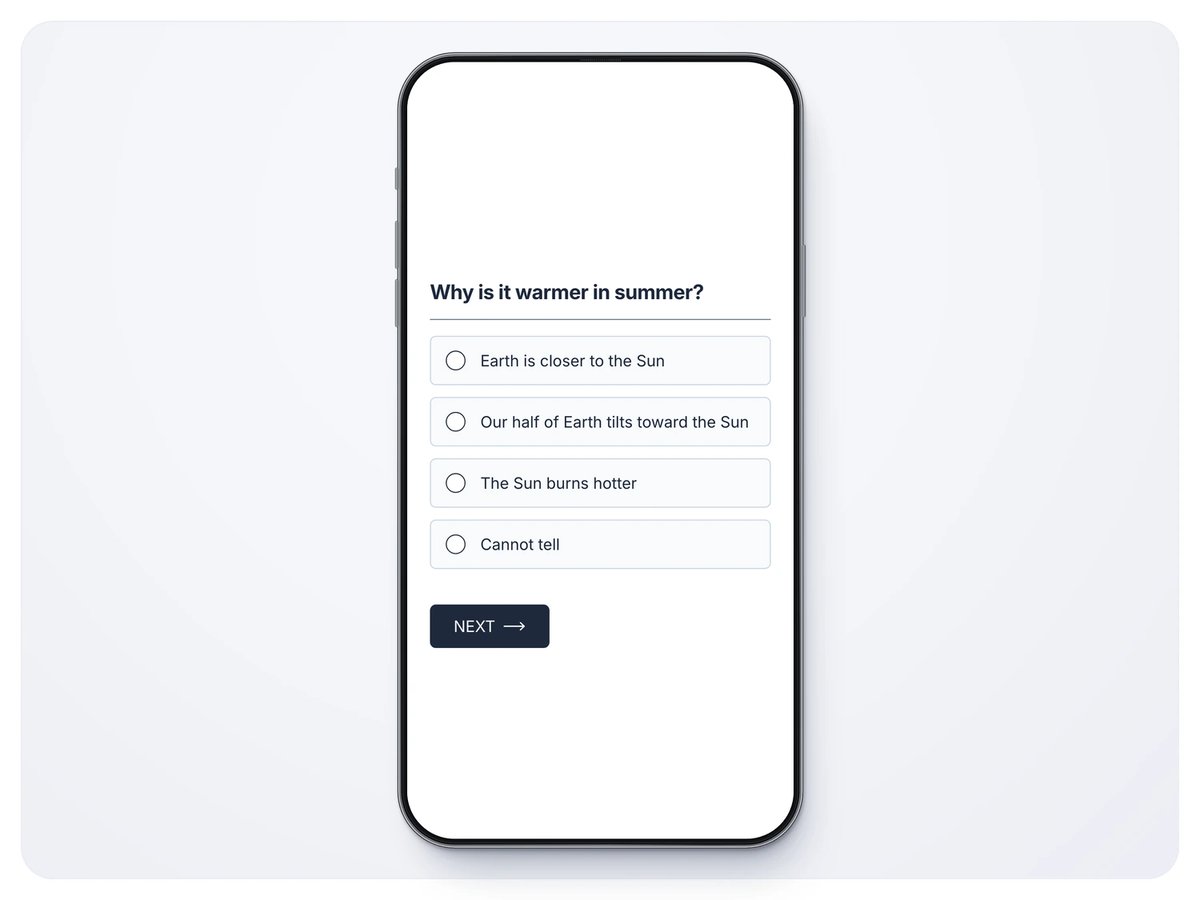
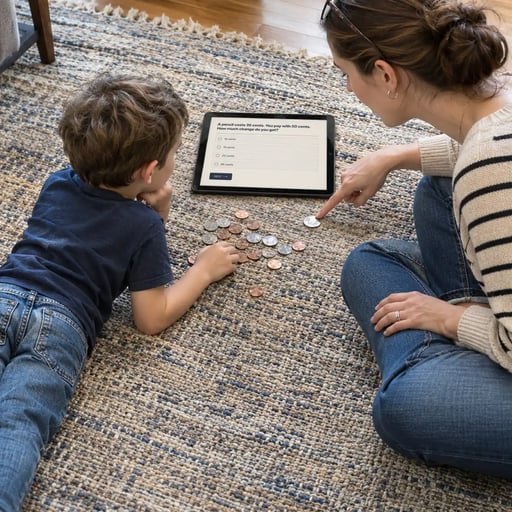
Question 7 as a team sees it on a phone
After the round, read the results together. Say the six teams score 9, 8, 8, 6, 5 and 3: three teams at 8 or more, two in the middle and one at 3. The scores are not the best part. Open question 7, Why is it warmer in summer?: two teams chose the tilt of Earth and four chose Earth is closer to the Sun, the answer that sounds right.
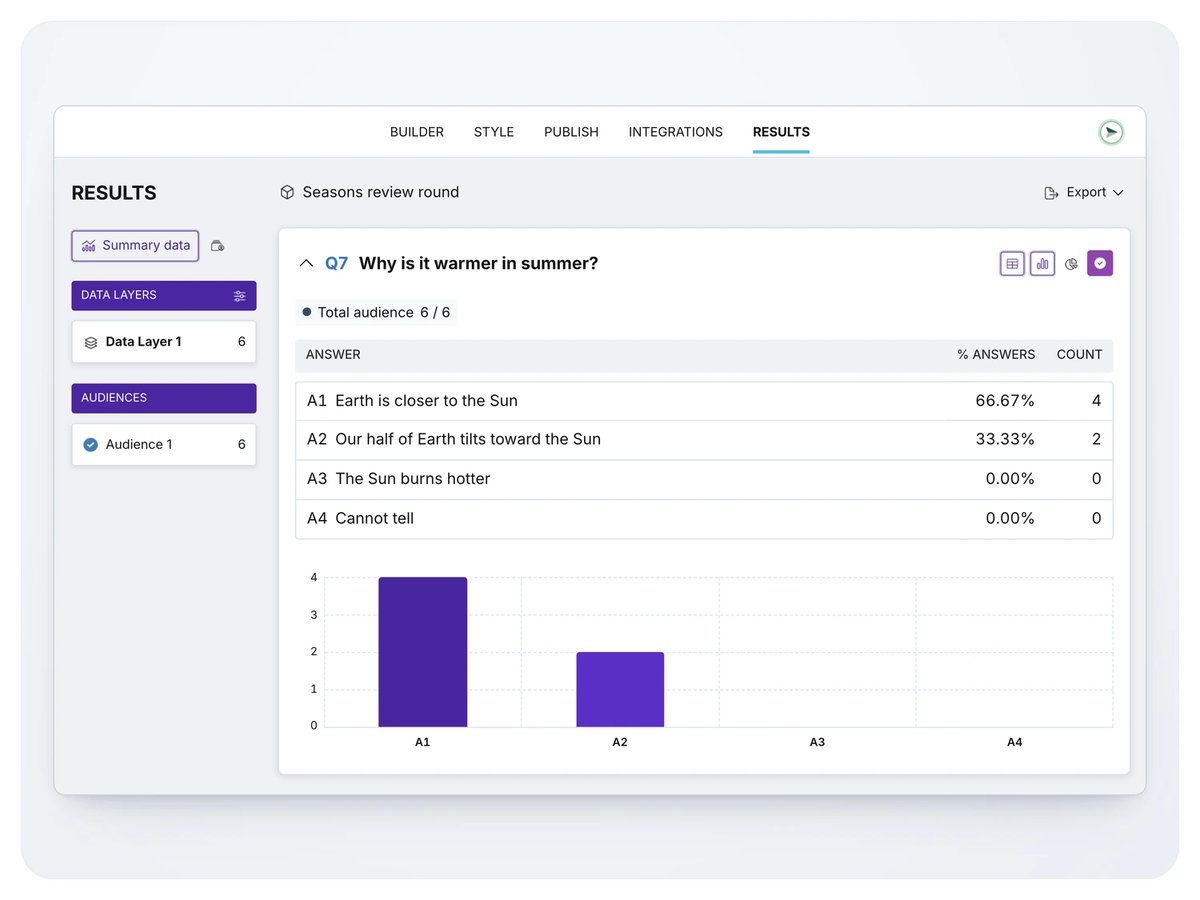
Question 7: four of six teams chose the closer-Sun answer
That is tomorrow's five-minute mini-lesson, and you found it before the class left the room. The round is ready for the next class, and one more sentence to the assistant makes a harder version for another period. It is formative assessment: it tells you what to teach next, not what grade to give.
Classroom games FAQ
How do I keep a classroom game from getting too loud?
Teach a quiet signal before the first game and practice it once. For a silent round of Charades, have each team write one guess and hold it up on your signal. A loud game usually has too little for waiting students to do, so give the audience a job as judge, timekeeper or scorer.
What if one team loses every round?
Change the scoring, not the team. Score each team against its own previous round, or give points for the best question a team writes. Reshuffle the teams between games so nobody carries a losing label.
Can I use a game score as a grade?
No. A game score reflects luck and mood as much as knowledge. Use it to decide what to reteach, and keep grades for planned assessments.
Can I run the scored round without student devices?
Yes. Label four corners with the answer choices. Have teams choose a corner, then tally their choices on paper before discussing the answer.
Run the first one tomorrow
Pick tomorrow's game by the minutes you actually have. Then let Pollsar finish it: describe the round to the AI assistant, put the QR code on the board, and Results shows the one question your class missed while the teams are still arguing about it. Start free, no credit card.